
Why Seniors Struggle to Let Go When Downsizing
For many seniors, letting go can feel like losing a part of the past or erasing pieces of their personal history. A single item may hold the memory of a meaningful moment, a long-standing family tradition, or a loved one they want to honor. This is why it is so common to hear an older adult say, “someone might want it someday.” It becomes a way to justify keeping belongings because the attachment is emotional, not practical. Often the phrase is less about the item itself and more about the fear of making a wrong choice, disappointing family members, or letting go of something that once played an important role in their life. Holding onto items can feel safer than risking regret, especially when the memories attached to them run deep.,
A helpful way for families to support them is to gently shift the conversation from “someone might want this” to “who would actually use or enjoy it right now.” Encourage honest conversations about what truly matters, offer reassurance that it is okay to let go of unused items, and remind them that donating can help someone else in the community. When the process focuses on respect, reassurance, and clear choices, seniors often feel less afraid and more confident making decisions.
A Simple Way to Decide What Stays and What Goes
When helping a parent or older adult sort through their belongings, families often find it easier to use a simple set of guiding categories. These categories offer enough structure to make the process less overwhelming, while still allowing room for emotions, memories, and thoughtful decision-making.
Before sorting through a room, start by placing each item into one of three simple groups, Keep, Donate, or Let go. This helps families make decisions with less stress and gives seniors a clear, gentle structure to follow. Use the categories below to guide the process.
Keep
- It is used regularly
- It supports daily living
- It fits comfortably in the new space
- It holds deep personal meaning
Donate
- It is in good condition
- Someone else could use it
- It is duplicated (extra dishes, extra tools, extra bedding)
- It is helpful but not essential
Let go
- It is broken or worn out
- It has not been used in over a year
- It causes stress, clutter, or takes up valuable space
- The senior is keeping it only out of guilt or obligation
Local Donation Options in Minnesota
Families in Minnesota can choose from a variety of local and statewide organizations that accept gently used household goods. Options include community thrift stores, nonprofit donation centers, senior housing community drives, and charitable pickup services. These make donating easy and help ensure that items support local families in need.
Trusted Donation Options in Minnesota:
- Bridging: A major Minnesota nonprofit that furnishes homes for individuals and families transitioning out of homelessness or hardship. They accept furniture, housewares, linens, and more.
- Arc’s Value Village: Supports people with disabilities through The Arc Minnesota. They accept clothing, household goods, decor, and small furniture.
- Goodwill Industries (Goodwill–Easter Seals Minnesota): Well-known and widely accessible donation centers throughout the state. They accept clothing, household items, and small furniture.
- Salvation Army Northern Division: Offers multiple drop-off locations around the Twin Cities and beyond. They accept clothing, furniture, kitchenware, and household goods.
- Habitat for Humanity ReStore (Twin Cities): Great for donating furniture, appliances, building materials, fixtures, cabinetry, and home improvement items.
Handling Sentimental Items and Family Disagreements
Downsizing can stir up a mix of emotions for everyone involved. Sentimental belongings, family heirlooms, or items connected to childhood memories often create tension or confusion about what should be kept.
Here are ways to support a smoother process:
Start with less emotional items
Build momentum by working through bathroom cabinets, linens, or everyday kitchen tools before tackling memorabilia or collections.
Choose a few favorites instead of everything
Encourage seniors to keep the most meaningful pieces rather than entire boxes or sets.
Use photos to preserve memories
Taking pictures of items before letting them go allows the memory to stay even when the item does not.
Encourage open communication
Give everyone a chance to express why an item matters to them. Understanding the emotional connection helps reduce conflict.
Bring in a neutral third party when needed
A senior move manager can help guide decisions, ease stress, and provide unbiased support.
Helping Your Loved One Move Forward With Confidence
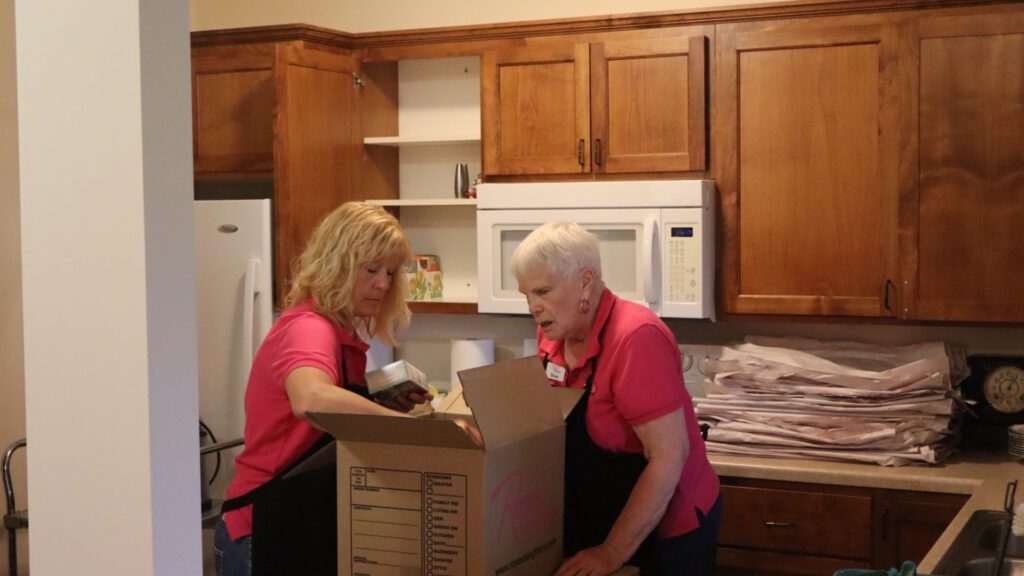
Sorting through decades of belongings is never simple. If your family feels stuck, unsure where to start, or overwhelmed by the emotional and physical demands of downsizing, Rose’s Daughters can help. Our team specializes in senior moves, organization, and hands-on support that honors your loved one’s history while preparing them for the next chapter.
If you need guidance during this process, reach out to Rose’s Daughters today. We are here to help your family every step of the way.
Glossary:
Key Takeaways:
Downsizing is easier when families use a simple structure to guide decisions and approach the process with patience and empathy. Focus on keeping items that are truly needed or meaningful, donating belongings that can help others, and letting go of anything that no longer serves a purpose. Encourage open communication, take breaks when emotions run high, and remember that progress often happens one small step at a time. With the right support, seniors and their families can move through this transition with confidence and peace of mind.
Read More